 Backgammon
Part Two — Give your moves a purpose
Lesson 13 — Leave a blot for a reason
Open the bookA blot is a risk, but avoiding every blot can leave your position cramped and passive. The question is what you gain in exchange for the exposure.
Perhaps you escape a back checker. Perhaps you place a builder where several future rolls can use it. Perhaps you slot an important point: leave one checker there now, hoping to cover it next turn.
From the opening position with 2–1, 13/11 6/5 puts a builder on 11 and slots the 5-point. White hopes to cover that point later. White also leaves two blots, including one that Black's back checkers may attack. Another legal approach, 24/23 13/11, develops the back checkers instead. These are different plans, not interchangeable ways to spend three pips.
Before leaving a blot, find the opposing checkers that could hit it. Count the distance in their direction of travel. Then look beyond that first count: two dice together, including repeated moves on doubles, may also reach it if the intermediate points are open.
Finally, ask what a hit would cost. Re-entering against one closed home-board point is very different from re-entering against five. The number of blots alone does not measure the danger.
Figure 13. Slotting the 5-point creates a future opportunity and an immediate target. Show the alternative split beside it, from an identical starting position.
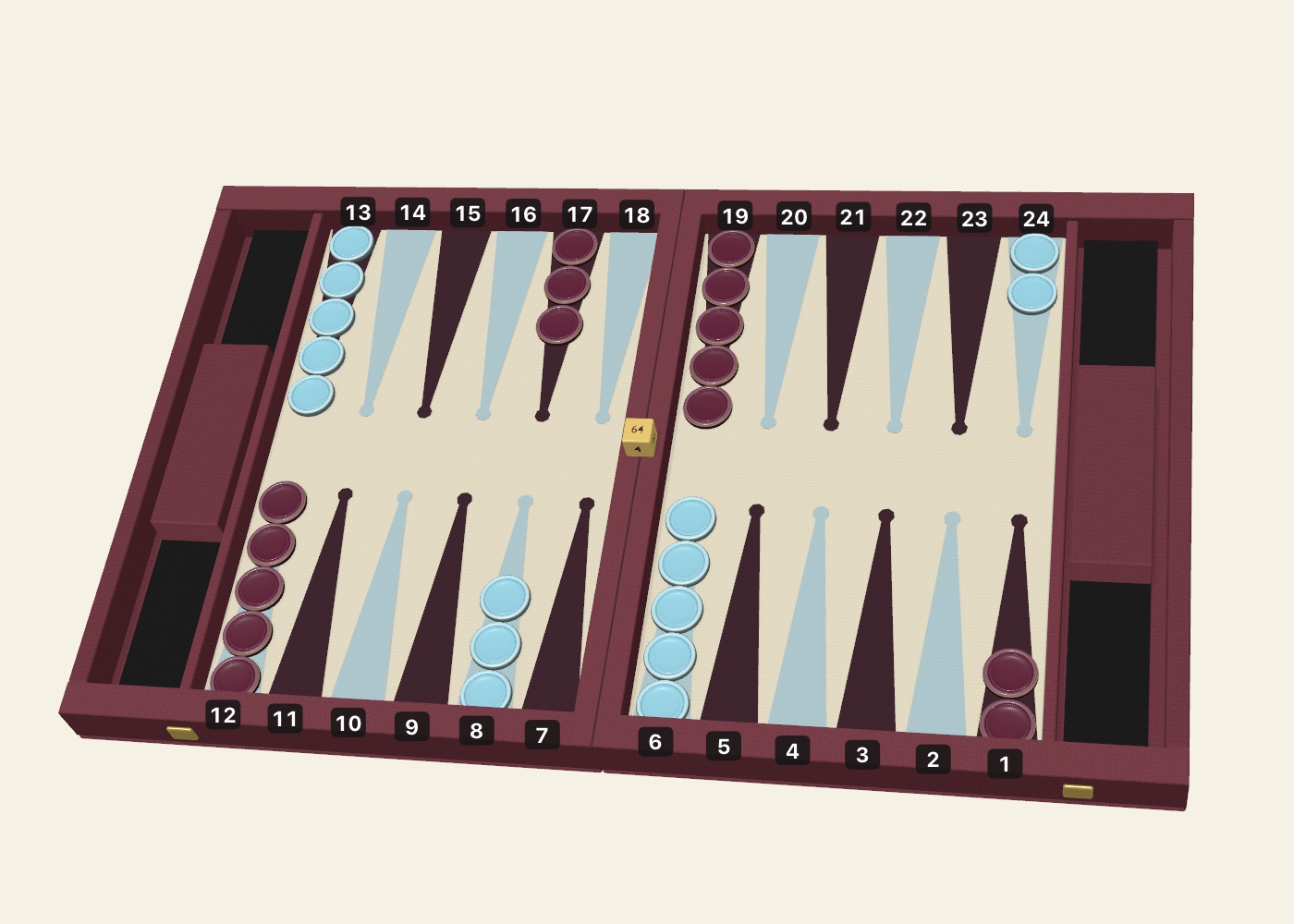
Board position
| Point × checkers | Bar | Borne off | |
|---|---|---|---|
| White | 6 × 5, 8 × 3, 13 × 5, 24 × 2 | 0 | 0 |
| Black | 1 × 2, 12 × 5, 17 × 3, 19 × 5 | 0 | 0 |
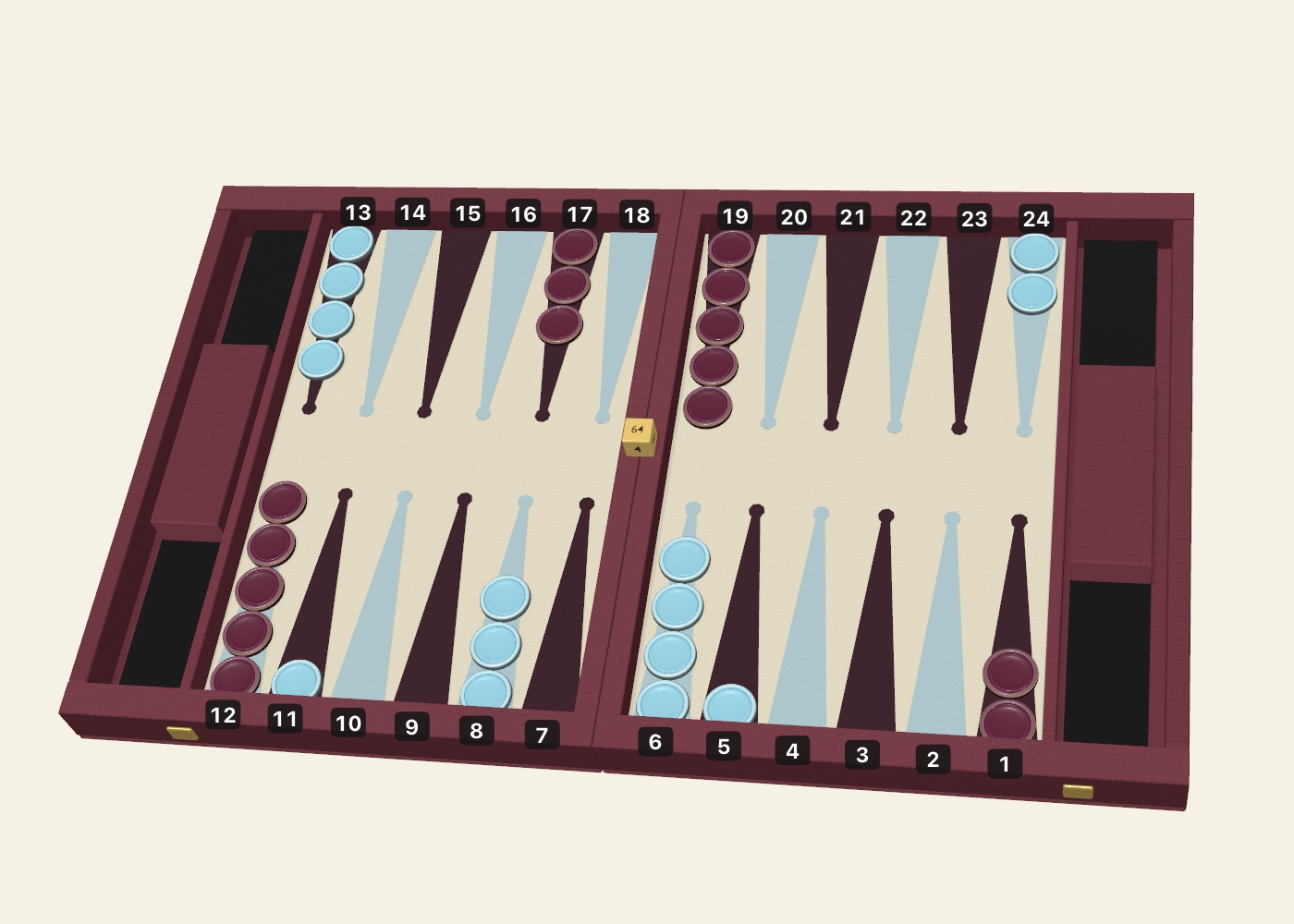
Board position
| Point × checkers | Bar | Borne off | |
|---|---|---|---|
| White | 5 × 1, 6 × 4, 8 × 3, 11 × 1, 13 × 4, 24 × 2 | 0 | 0 |
| Black | 1 × 2, 12 × 5, 17 × 3, 19 × 5 | 0 | 0 |
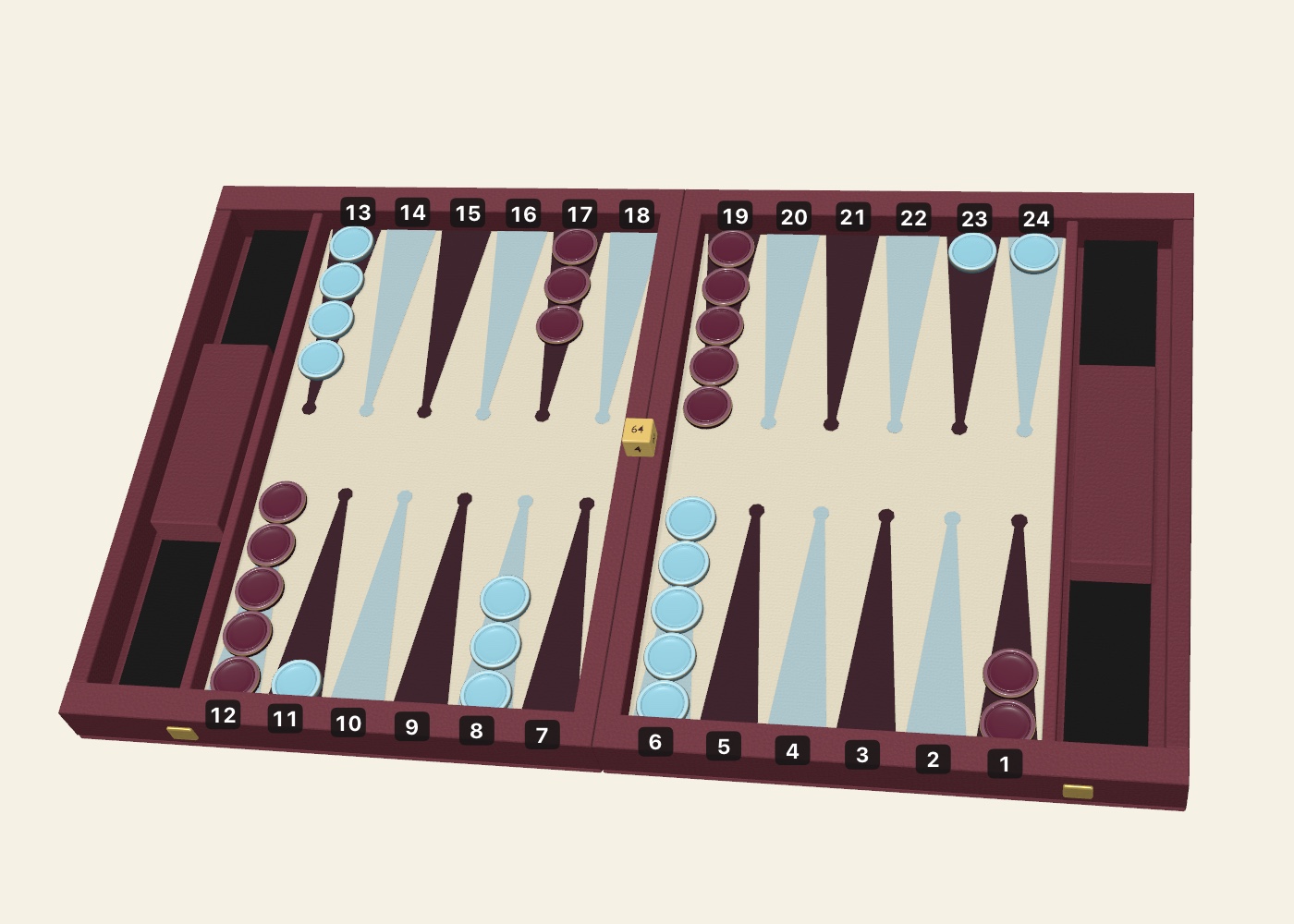
Board position
| Point × checkers | Bar | Borne off | |
|---|---|---|---|
| White | 6 × 5, 8 × 3, 11 × 1, 13 × 4, 23 × 1, 24 × 1 | 0 | 0 |
| Black | 1 × 2, 12 × 5, 17 × 3, 19 × 5 | 0 | 0 |
Your turn. Is an exposed checker always a mistake?
Explanation. No. A useful risk may improve your chances. Explain the gain, identify the possible hit, and consider the recovery before calling the play good or bad.