 Backgammon
Part Four — Learn the doubling cube
Lesson 20 — Offer, take, or pass
Open the bookThe doubling cube changes how many points the game is worth. It does not move checkers or change the dice.
A game begins at a value of 1, with the cube centered. A physical cube often shows 64 in its neutral position because there is no 1 face; the game is still worth 1. Read the game's status as well as the visible numeral.
When the rules allow it, a player may offer a double at the start of their turn, before rolling. The opening roll is played first; do not offer a double before that opening move. To double a game worth 1, offer the cube at 2.
Your opponent has two choices. Take means accept and continue at the new value. Pass means decline and lose the game at its previous value. Passing a proposed double from 1 to 2 loses 1 point, not 2, and it ends the game without a gammon multiplier.
The player who accepts the double owns the cube. Only that player may offer the next redouble, on a later turn before rolling, when permitted. If the opponent accepts that redouble, ownership passes to them.
Cube ownership is the right to make the next offer. It does not mean that only the owner can win the higher game value.
Figure 17. Centered at 1, offered at 2, accepted by Black. Black now owns the right to offer the next redouble.
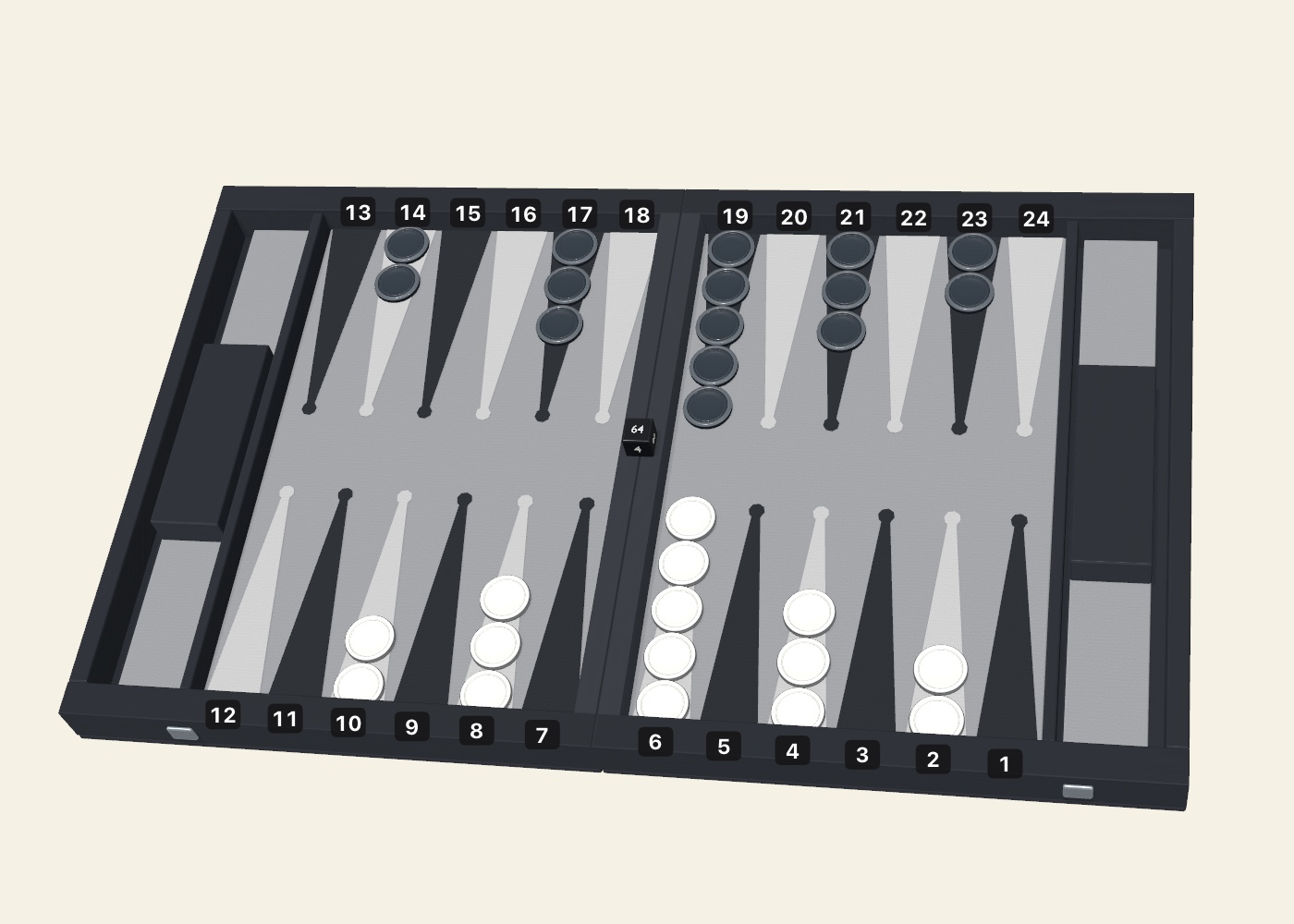
Board position
| Point × checkers | Bar | Borne off | |
|---|---|---|---|
| White | 2 × 2, 4 × 3, 6 × 5, 8 × 3, 10 × 2 | 0 | 0 |
| Black | 14 × 2, 17 × 3, 19 × 5, 21 × 3, 23 × 2 | 0 | 0 |
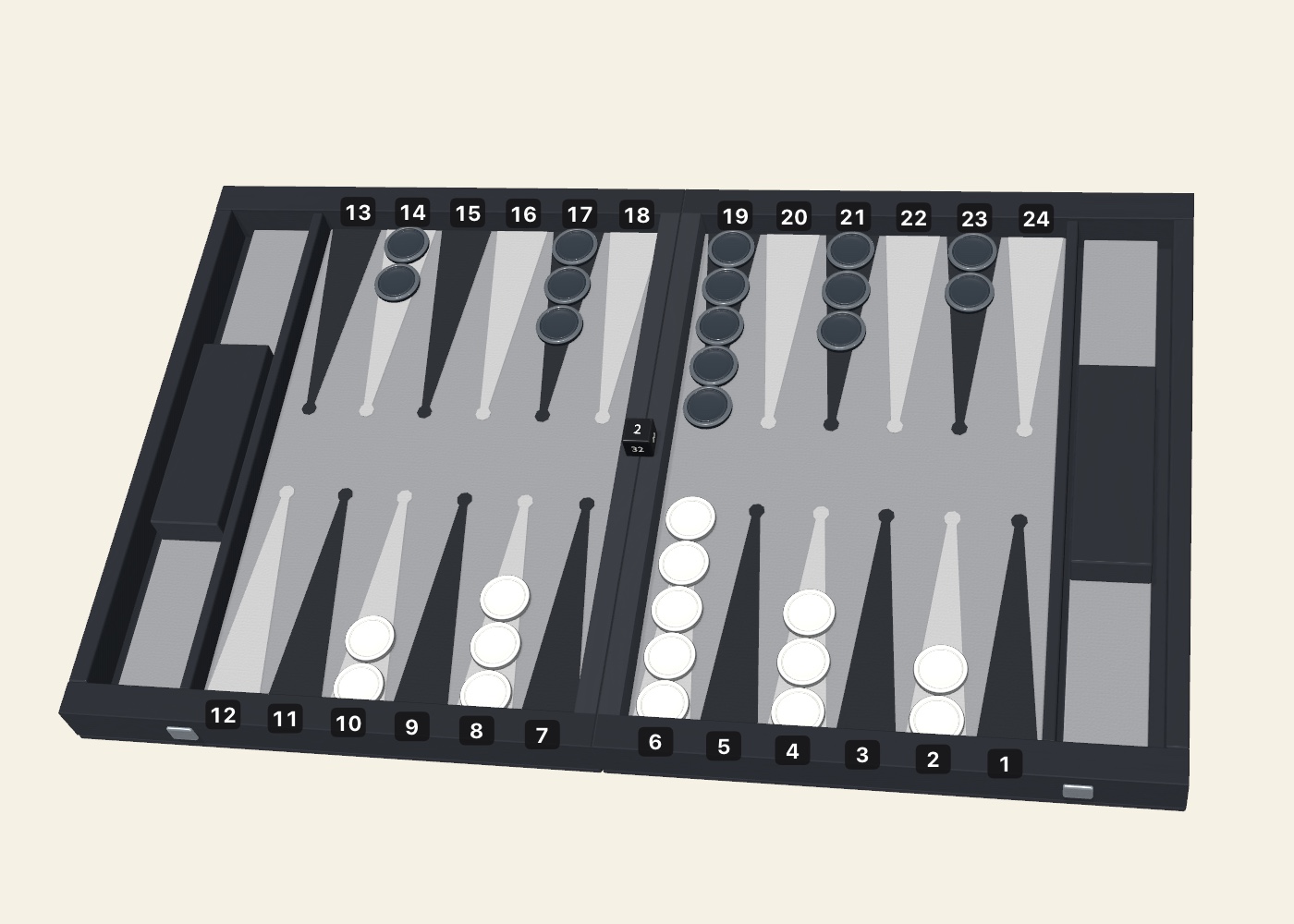
Board position
| Point × checkers | Bar | Borne off | |
|---|---|---|---|
| White | 2 × 2, 4 × 3, 6 × 5, 8 × 3, 10 × 2 | 0 | 0 |
| Black | 14 × 2, 17 × 3, 19 × 5, 21 × 3, 23 × 2 | 0 | 0 |
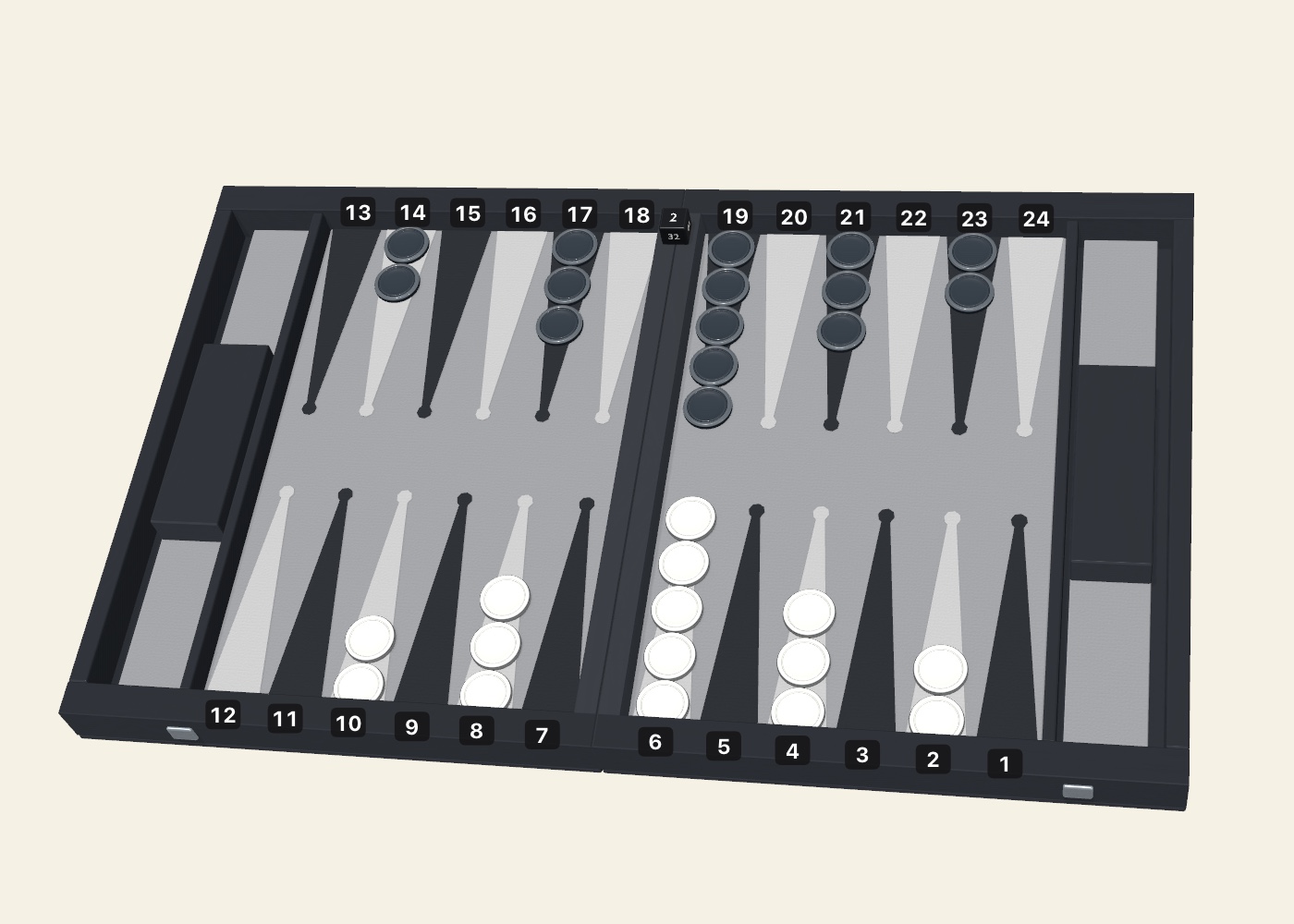
Board position
| Point × checkers | Bar | Borne off | |
|---|---|---|---|
| White | 2 × 2, 4 × 3, 6 × 5, 8 × 3, 10 × 2 | 0 | 0 |
| Black | 14 × 2, 17 × 3, 19 × 5, 21 × 3, 23 × 2 | 0 | 0 |
Your turn. You own a cube at 2 and offer 4. Your opponent passes. How many points do you win?
Explanation. Two, the value before the proposed redouble. Four would become the game value only if the opponent accepted.
Put this lesson into practice
Review the doubling-cube examples for offers, ownership and points before practising the offer, take and pass sequence.