 Backgammon
Part One — Play your first game
Lesson 4 — Use the whole roll
Open the bookYou must use both dice when a legal way to do so exists. A tempting first move is not allowed if it prevents you from using the second die when another sequence would use both.
If you can use only one die, use whichever is playable. If either number can be played, but no sequence can use both, you must play the higher number.
With doubles, you have four moves of the same number. A roll of 3–3 gives you four threes. You may spread them across several checkers or use several on one checker. Every landing must be legal, and you must use as many of the four moves as possible.
Here is a useful preview of bearing off. White has only one checker left, on point 2, and rolls 2–1. Taking it straight off with the 2 would use only one die. Instead, White must move 2 to 1 with the 1, then take that checker off with the 2. This uses both numbers.
Now place the last checker on point 1. With the same roll, either die could remove it, but using both is impossible. White must use the 2, the higher number.
Figure 4. One checker, two different obligations. From point 2, use both dice. From point 1, use the higher die.
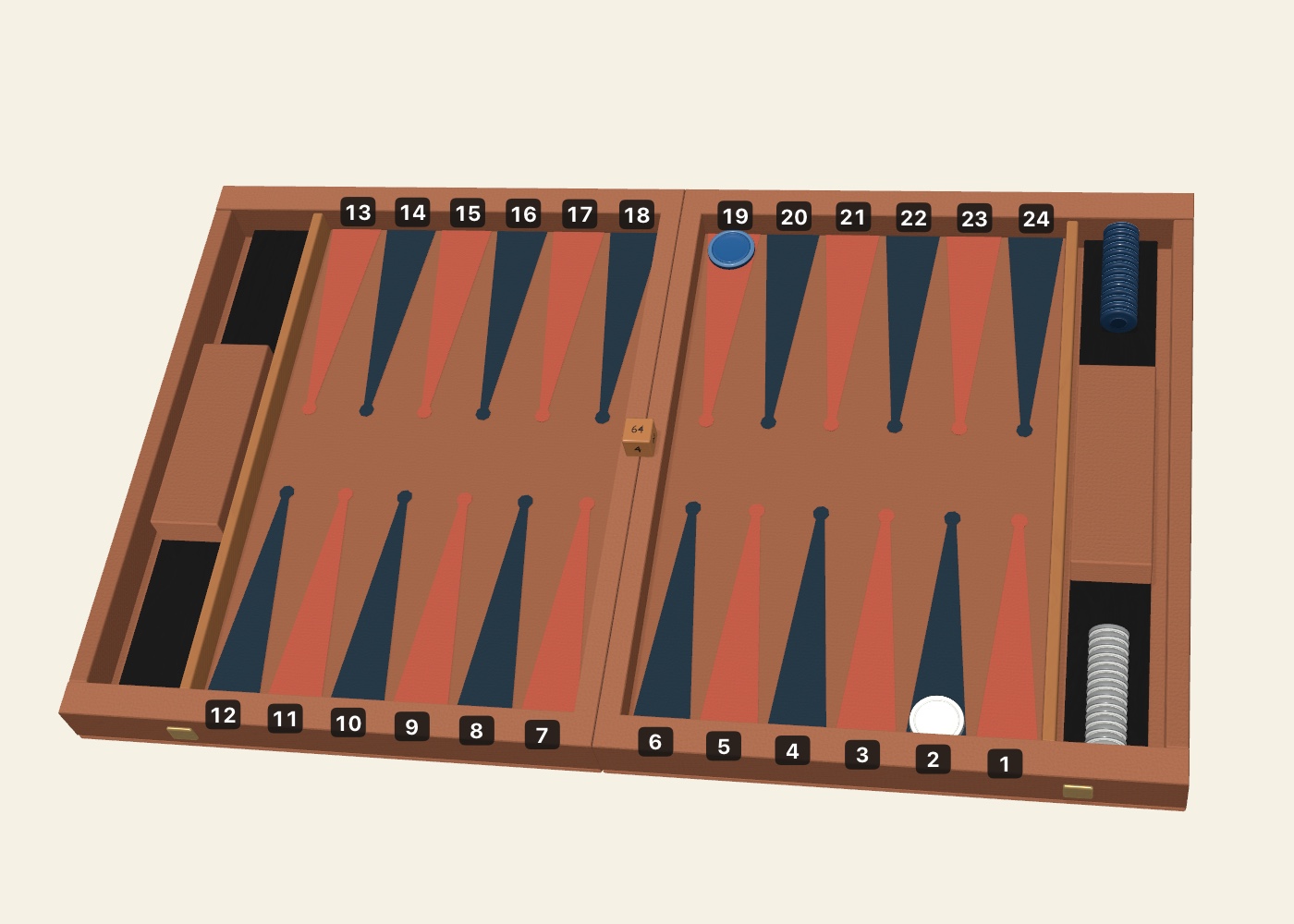
Board position
| Point × checkers | Bar | Borne off | |
|---|---|---|---|
| White | 2 × 1 | 0 | 14 |
| Black | 19 × 1 | 0 | 14 |
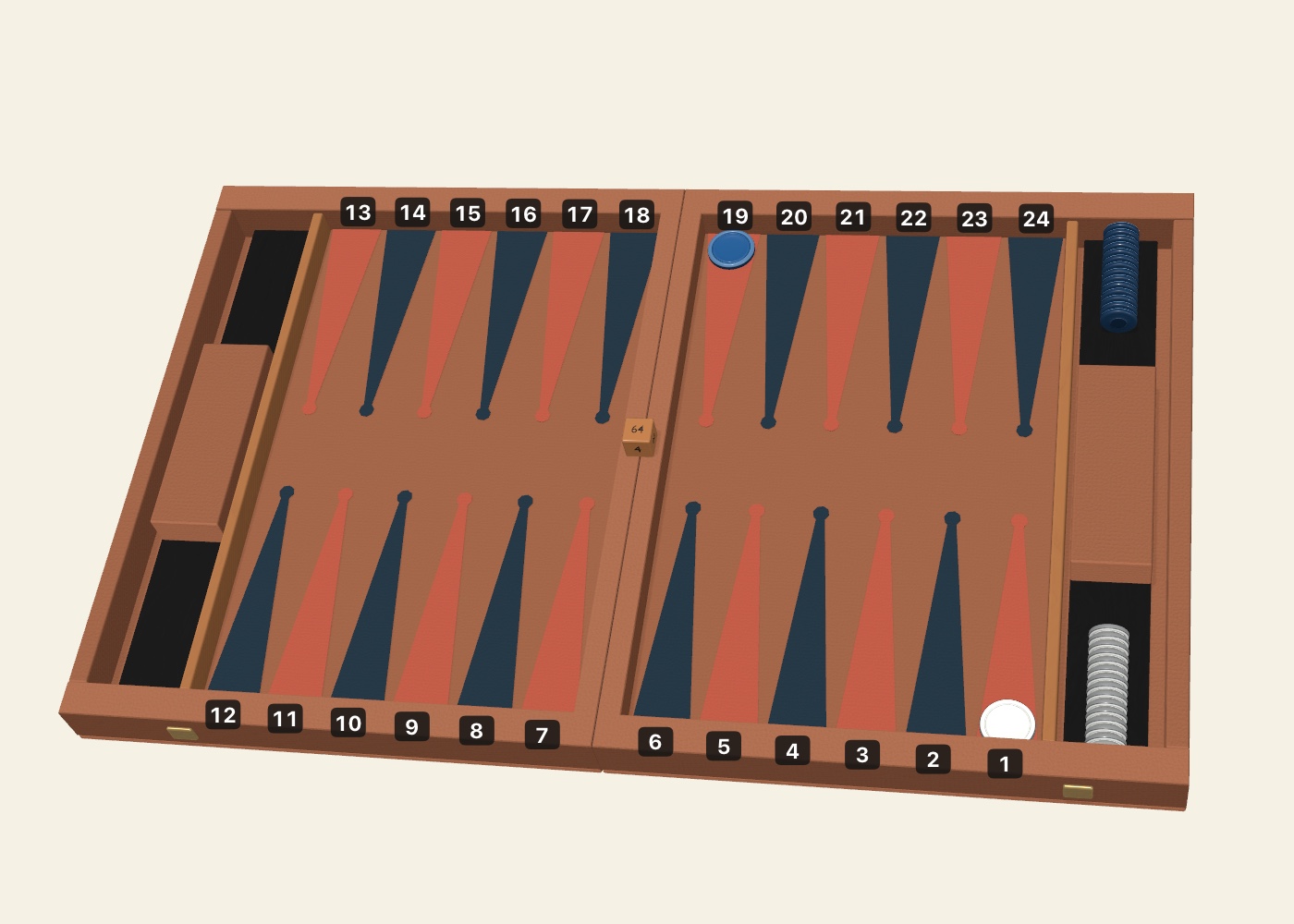
Board position
| Point × checkers | Bar | Borne off | |
|---|---|---|---|
| White | 1 × 1 | 0 | 14 |
| Black | 19 × 1 | 0 | 14 |
Your turn. You roll 4–4. Is that two moves of four, four moves of four, or one move of sixteen?
Explanation. Four moves of four, as far as the position allows. A checker that uses all four must make four legal landings.
Put this lesson into practice
Check the rules for doubles and using both dice, with examples of when you must play the higher number.