 Backgammon
Part One — Play your first game
Lesson 9 — Count the result
Open the bookWhen you bear off your last checker, look at what your opponent has removed and where their remaining checkers are.
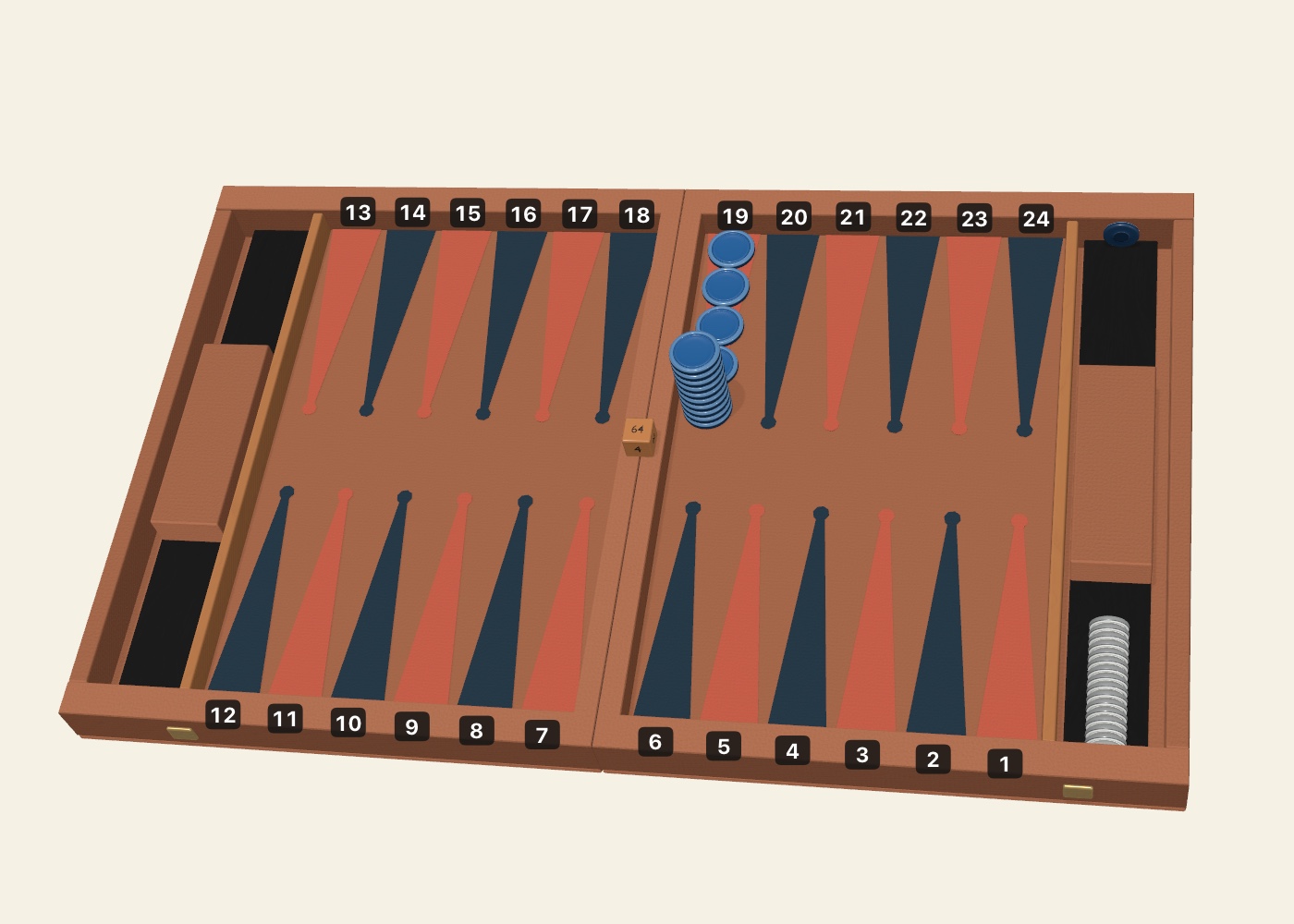
If your opponent has borne off at least one checker, you win a single game: one times the current game value.
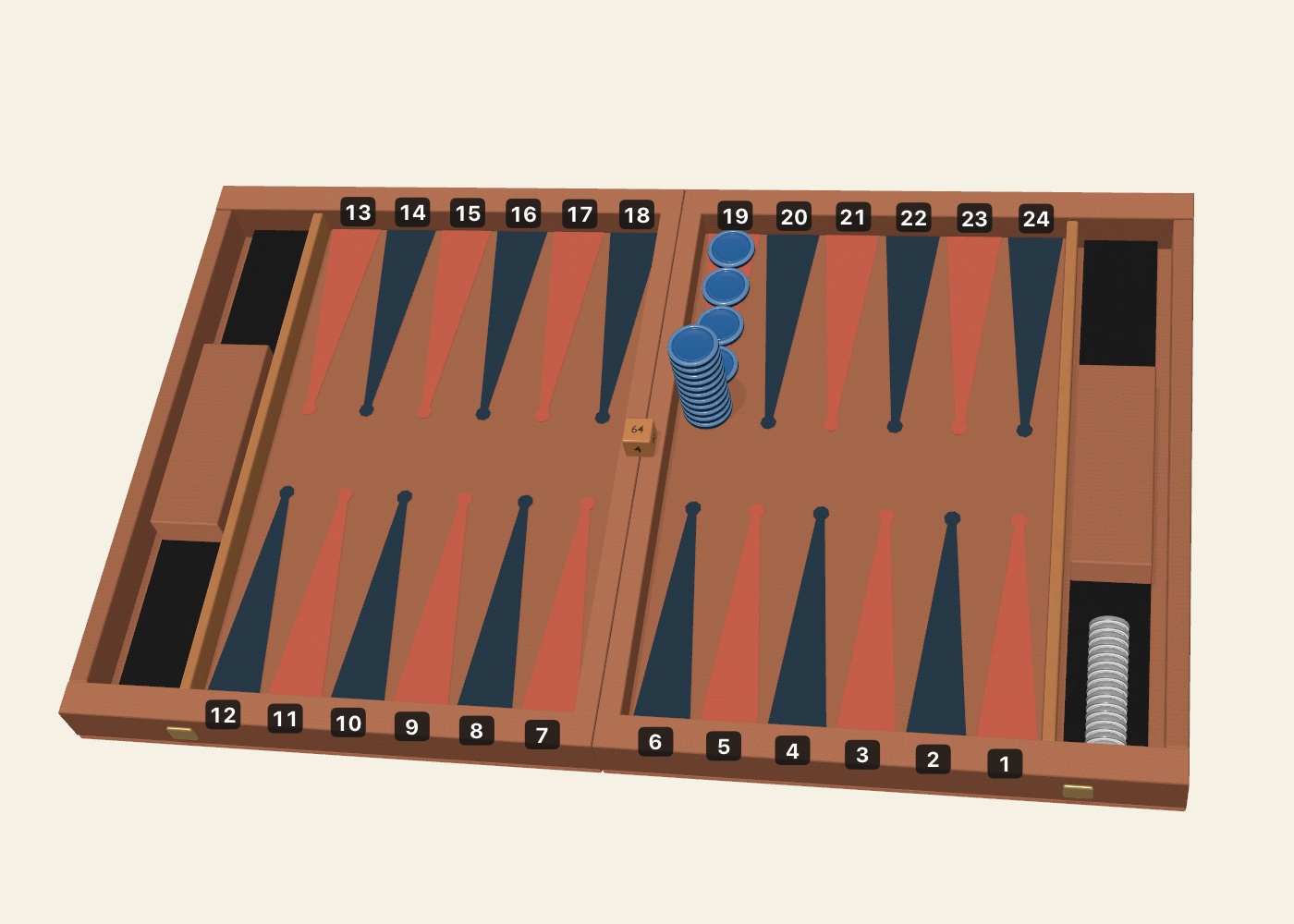
If your opponent has borne off none, you usually win a gammon: twice the game value.
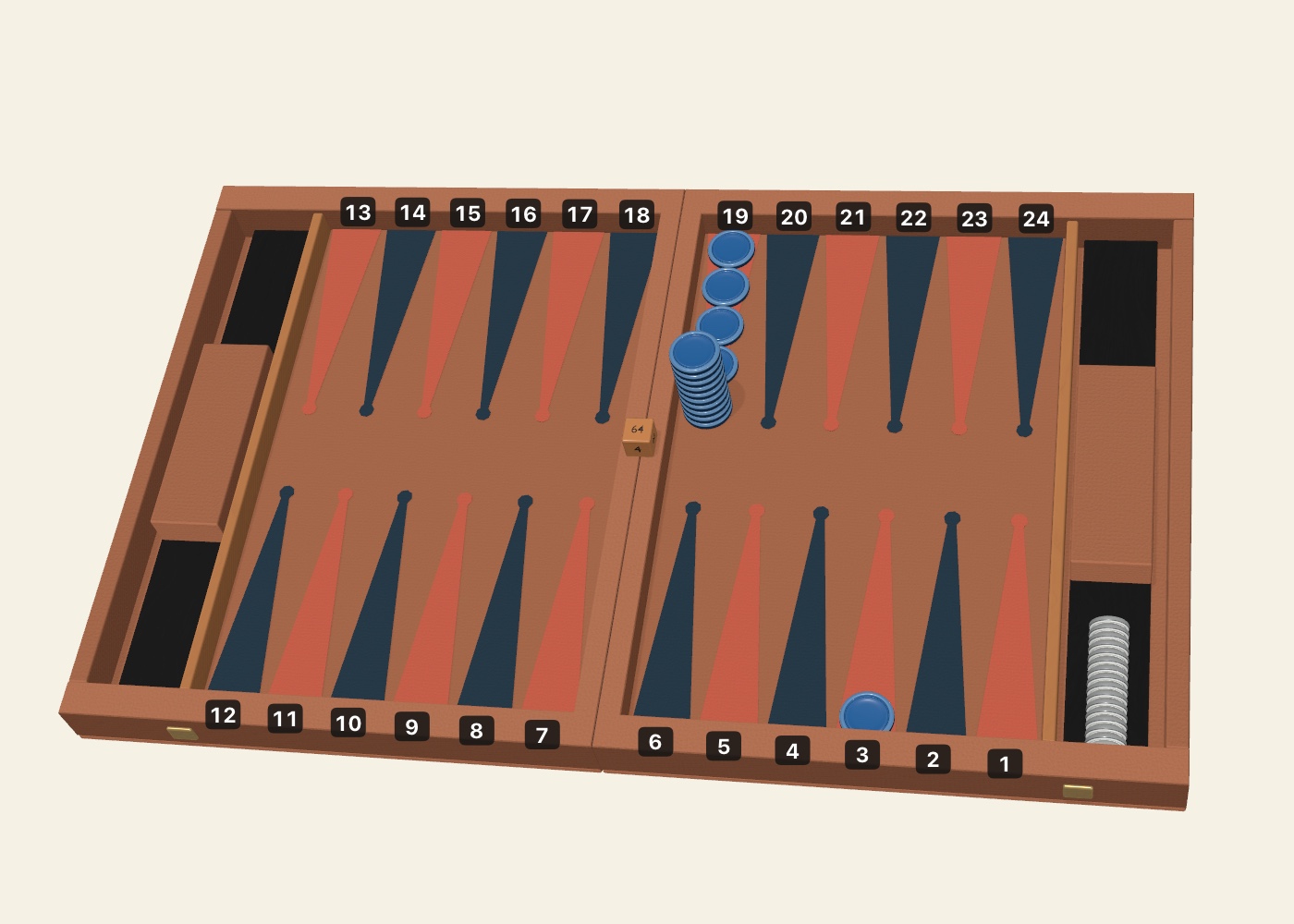
There is one stronger result. If your opponent has borne off none and still has a checker on the bar or in your home board, you win a backgammon: three times the game value. Use the largest applicable result; you do not add a gammon and a backgammon together.
At a game value of 1, these results score 1, 2, or 3 points. If an accepted double has raised the game value to 2, they score 2, 4, or 6.
The backgammon condition refers to the winner's home board. A losing checker sitting in its own home board does not meet that condition.
Figure 10. Three finishes: a single, a gammon, and a backgammon. In each panel, White has just borne off the final checker.
Board position
| Point × checkers | Bar | Borne off | |
|---|---|---|---|
| White | — | 0 | 15 |
| Black | 19 × 14 | 0 | 1 |
Board position
| Point × checkers | Bar | Borne off | |
|---|---|---|---|
| White | — | 0 | 15 |
| Black | 19 × 15 | 0 | 0 |
Board position
| Point × checkers | Bar | Borne off | |
|---|---|---|---|
| White | — | 0 | 15 |
| Black | 3 × 1, 19 × 14 | 0 | 0 |
Your turn. You bear off all 15. Your opponent has borne off one checker but still has another on the bar. Is this a backgammon?
Explanation. No. Once the loser has borne off even one checker, the result is a single game. Their checker on the bar does not change it.
Put this lesson into practice
Compare the worked examples of singles, gammons and backgammons, including how the accepted cube value changes the points awarded.