 Backgammon
Part Two — Give your moves a purpose
Lesson 11 — Build useful points
Open the bookA made point does two jobs. It gives your checkers a safe place to stand, and it takes a landing place away from your opponent.
Its value depends on where it sits. A home-board point makes entering from the bar harder. A point beside another made point helps build a barrier. A point far from the action may provide safety without doing much to restrain the opponent.
From the starting position, White can use 3–1 to play 8/5 6/5. Point 5 sits beside the already-made 6-point. White gains a useful home-board point while keeping the 6-point intact.
Notice the checkers left behind. White still has two on 8 and four on 6. A move's value includes the structure it preserves, not just the point it creates.
A checker positioned to help make another point is called a builder. A third checker on a made point is a spare: you can move it without immediately giving up that point. Checkers spread across useful distances often give you more ways to improve than a tall stack on one triangle.
Figure 11. Two builders meet on point 5. The new point works with point 6, and both starting points remain made.
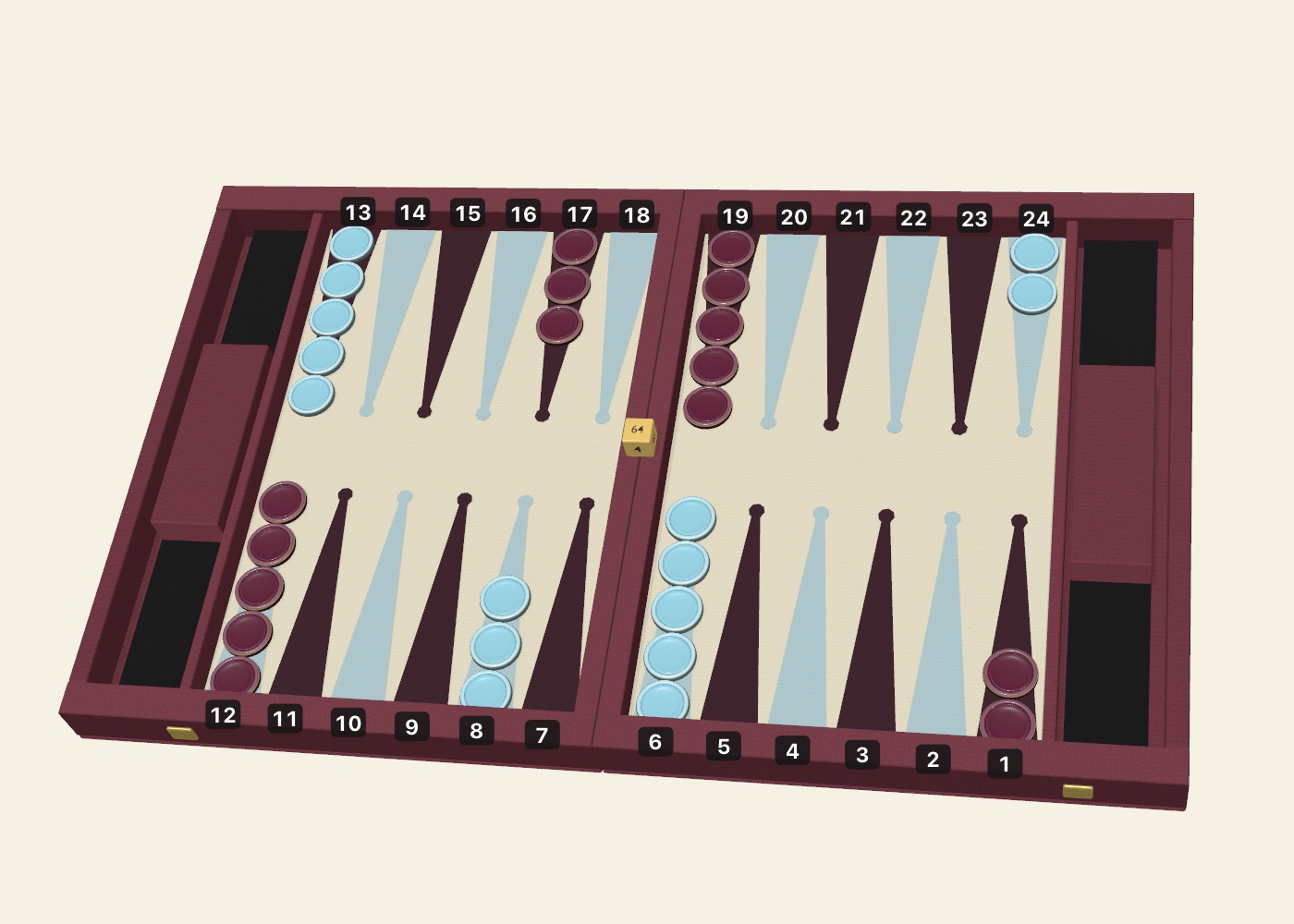
Board position
| Point × checkers | Bar | Borne off | |
|---|---|---|---|
| White | 6 × 5, 8 × 3, 13 × 5, 24 × 2 | 0 | 0 |
| Black | 1 × 2, 12 × 5, 17 × 3, 19 × 5 | 0 | 0 |
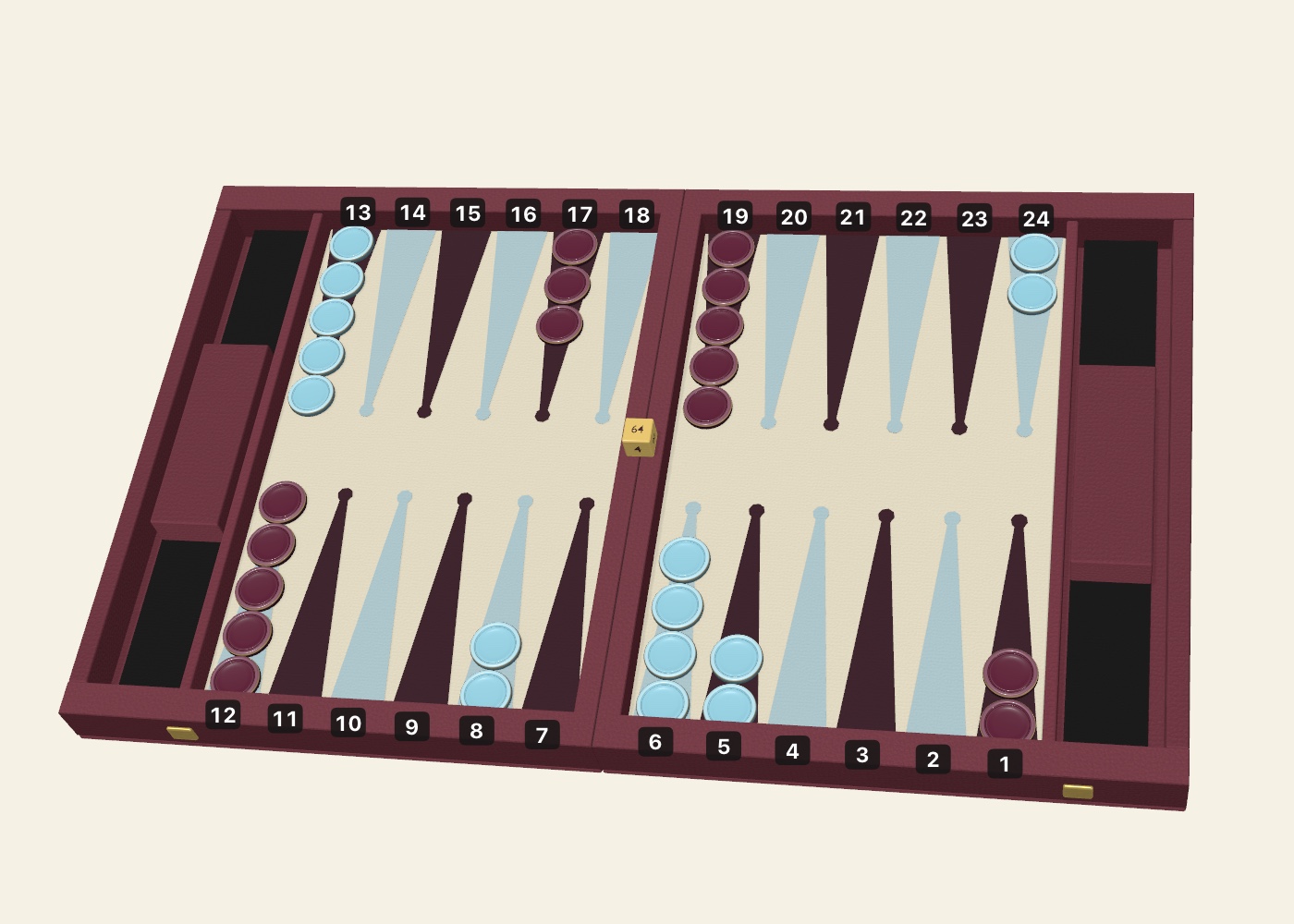
Board position
| Point × checkers | Bar | Borne off | |
|---|---|---|---|
| White | 5 × 2, 6 × 4, 8 × 2, 13 × 5, 24 × 2 | 0 | 0 |
| Black | 1 × 2, 12 × 5, 17 × 3, 19 × 5 | 0 | 0 |
Your turn. What changes when you move a checker from a point holding three of your checkers? What changes when that point holds only two?
Explanation. From three, you leave a made point behind. From two, you leave a blot. Moving the last spare and breaking a point have different consequences.