 Backgammon
Part One — Play your first game
Lesson 6 — Return from the bar
Open the bookWhen you have a checker on the bar, bringing it back takes priority. You cannot move another checker until all your checkers on the bar have entered.
You enter into the opponent's home board. White enters on 24 with a 1, on 23 with a 2, and so on down to 19 with a 6. Black enters on 1 with a 1, up to 6 with a 6.
The usual landing rules apply. You may enter onto an empty point or your own point. You may enter onto an opposing blot and hit it. You may not enter onto a point held by two or more opposing checkers.
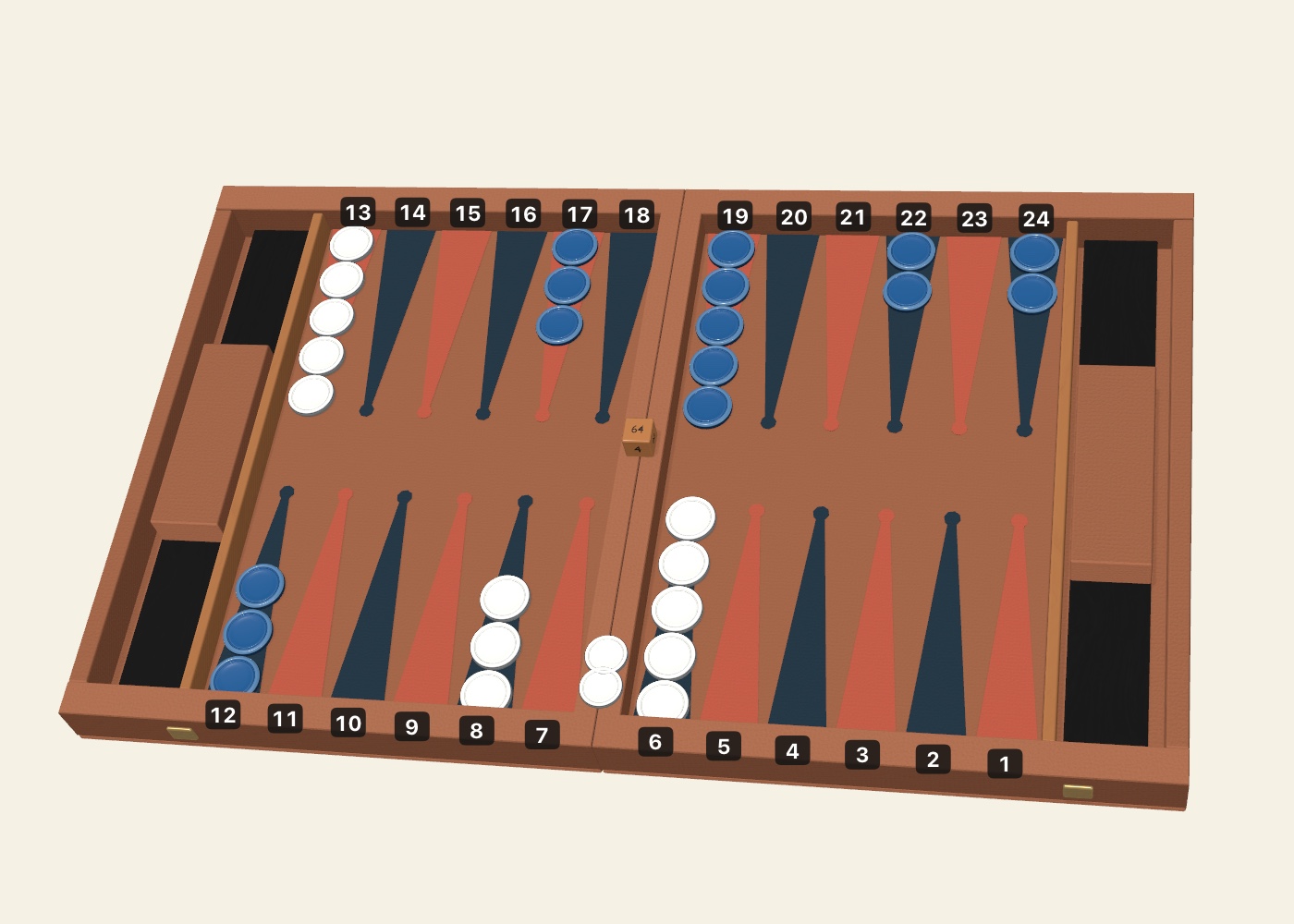
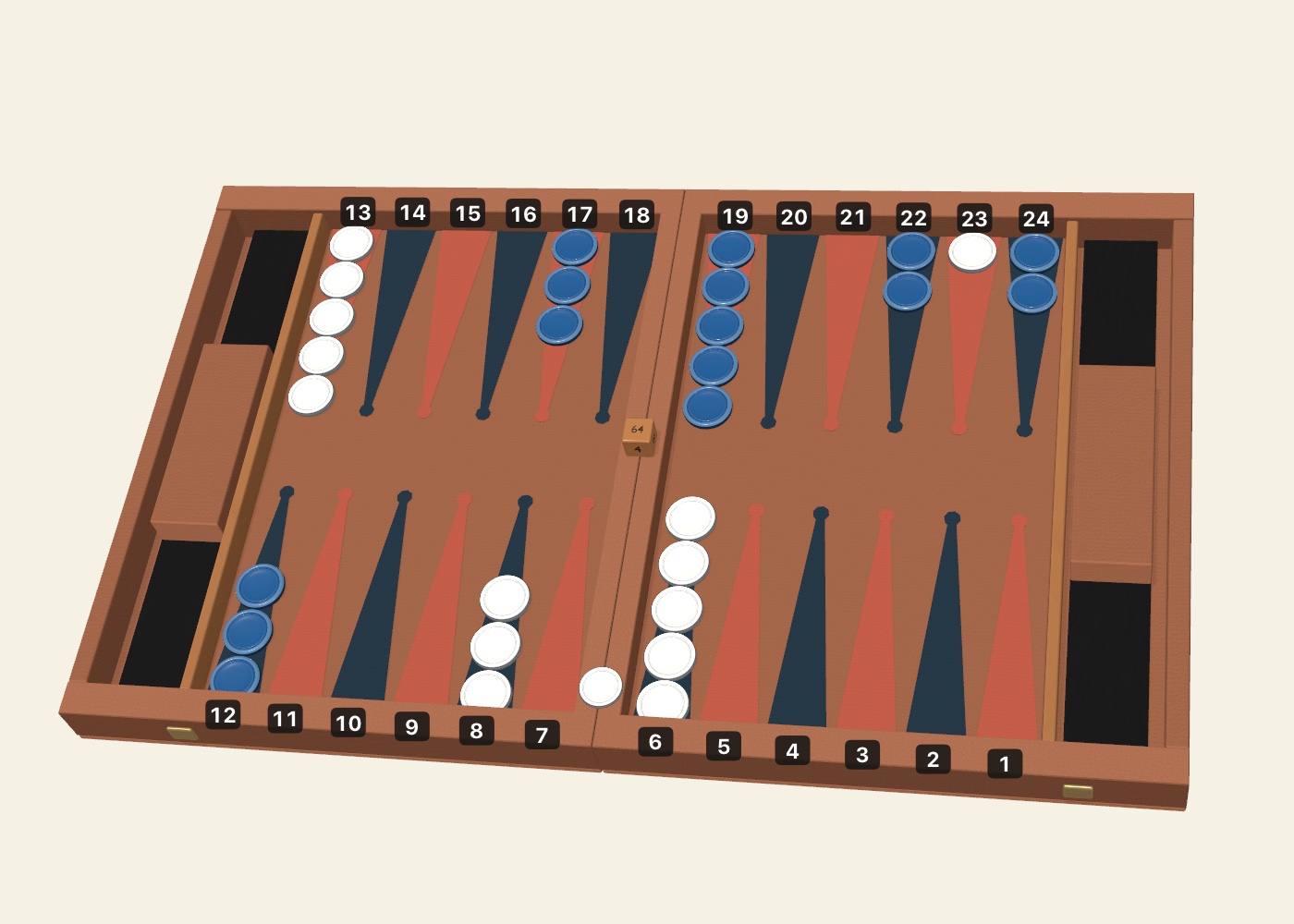
In Figure 6, White has two checkers on the bar and rolls 2–3. Point 23 is open, but Black holds point 22. White enters one checker on 23 using the 2. The 3 cannot enter the second checker. White's turn ends, even if a checker elsewhere could move three points.
If every entry point for your roll is closed, you make no move that turn. With all six points in the opponent's home board closed, none of your dice can enter until that board opens.
Figure 6. One checker enters. The other remains on the bar, so White cannot use the 3 elsewhere.
Board position
| Point × checkers | Bar | Borne off | |
|---|---|---|---|
| White | 6 × 5, 8 × 3, 13 × 5 | 2 | 0 |
| Black | 12 × 3, 17 × 3, 19 × 5, 22 × 2, 24 × 2 | 0 | 0 |
Board position
| Point × checkers | Bar | Borne off | |
|---|---|---|---|
| White | 6 × 5, 8 × 3, 13 × 5, 23 × 1 | 1 | 0 |
| Black | 12 × 3, 17 × 3, 19 × 5, 22 × 2, 24 × 2 | 0 | 0 |
Your turn. White has one checker on the bar and rolls a 4. Which point is the entry point?
Explanation. Point 21. Count inward from 24: 24, 23, 22, 21. The roll chooses the entry point; you cannot pick a different open point.
Put this lesson into practice
Follow the hitting and bar-entry examples to check which entry points are open and when other checkers can move again.